
500 E. Ridge Road, Suite 202
Griffith, IN 46319
(866) 972-1155
fax: (219) 972-6314



recycling facilities
 Recycling facilities (also known as MRFs or Material Recovery Facilities) are used to process recyclables that are collected at the curbside, collection sites, drop off centers, or construction & demolition sites. There are a number of different types of processes and equipment used at recycling facilities.
Recycling companies have developed a number of different ways to collect and process recyclables. Curbside collection often involves one bin for all types of recyclables. The waste management company will either deposit all the items into the collection vehicle or sort the items at the curb to place them into the correct bin in the collection vehicle. Collections sites are also used to collect recyclables. At collection sites, the consumer separates the disposable items into different containers and the waste management company collects the items from these sites to bring them to recycling facilities.1
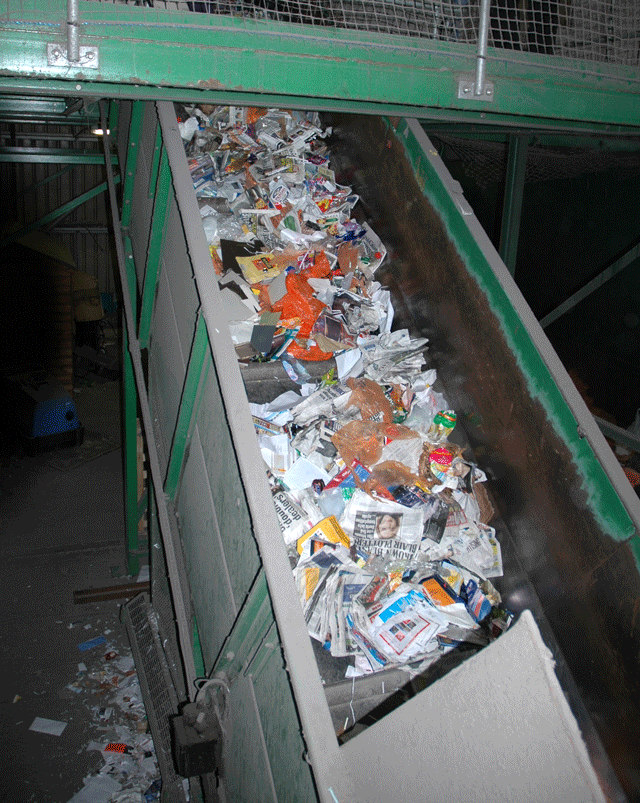
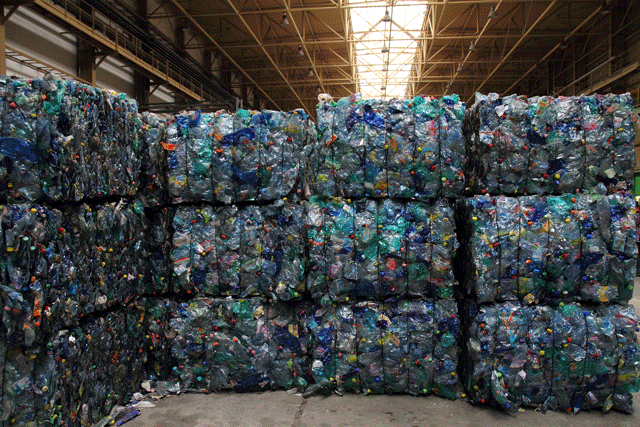
Once collected, the recyclables are taken to a recycling center (presorted) or to MRFs (unsorted). The presorted items are put directly into machines to breakdown and compact them into bales. The unsorted items are deposited into a sorting section of the facility where the materials are sorted by hand as well as by machines. Once the recyclable items are compacted into bales, they are sold off for reuse.
Recycling Sorting Containers at Collection Site
Recyclable Material on Tipping Floor, waiting to be processed
Sorting Machine at Recycling Facility
Bales of Recyclable in Storage Area of Recycling Facility
There are many different types of recyclables such as plastic, paper, glass, wood and metals as well as compost, tires, oil & antifreeze, electronics, construction & demolition, toner/printer cartridges, and specialty items (lights and sea vessels).2
A recycling facility's original design may vary based on the municipality's requirements. The following are a few requirements:
- Barriers/appurtenances to control access,3
- Concrete/asphalt paved road for access to center in all weather,3
- Appurtenances to control pollution/litter,3
- Appurtenances to screen the center from the view of members of the general public,3
- Bulk items (white goods, scrap metal) must be processed on a concrete/asphalt paved surface to control run-on/run-off/standing water accumulation,3
- Approved structure by local municipalities,3 and
- Storage areas for processed materials.3
The single-stream MRF facility is composed of a process area, tipping floor, equipment, and storage areas. The single-stream equipment consists of drum feeders, initial sorters, large star screens, second sorters, medium star screens, glass sorters, magnetic metal sorters, eddy current separators, and infrared lasers to sort the different recyclable materials received.4
Specialized contractors are needed to design and manage the construction of recycling facilities or MRFs. Waste Industry Contractors can help you with your recycling center design-build!
Contact us today!
- Recycling. Explain That Stuff. http://www.explainthatstuff.com/recycling.html. July 2, 2015.
- What Are The Different Types of Recycling Plants? www.wisegeek.com. http://www.wisegeek.com/what-are-the-different-types-of-recycling-plants.htm. July 2, 2015.
- Solid Waste Management Authority Regulations Governing Recycling Centers. Southern Nevada Health District. http://southernnevadahealthdistrict.org/solid-waste/recycling-regs.php. July 2, 2015.
- How it Works: Inside The Machine That Separates Your Recyclables. Popular Science. http://www.popsci.com/technology/article/2013-07/how-it-works-recycling-machines-separate-junk-type. July 2, 2015.


© 2015 Waste Industry Contractors, LLC. All rights reserved
Website designed and developed by C. Schutzius


